

Blog
12K vs 18K Carbon in Padel Rackets: What Really Changes on Court?

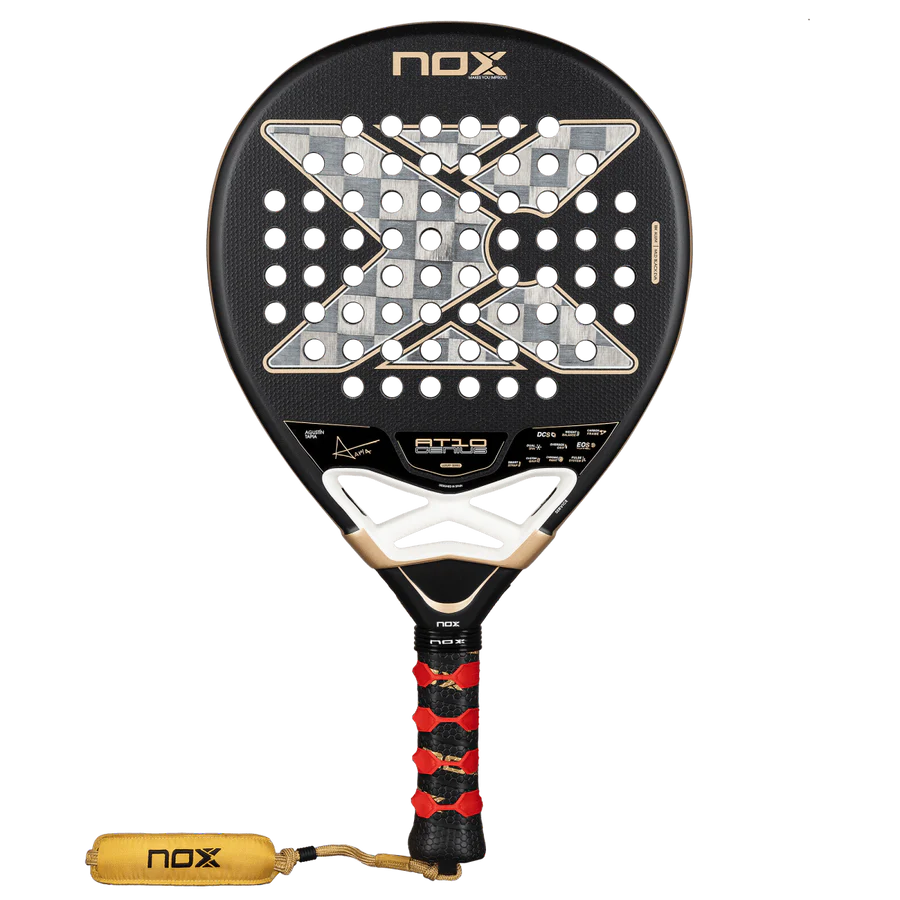
12K and 18K carbon are two of the most common premium face constructions used in modern padel rackets, but the number alone does not tell you which racket is more powerful, softer or easier to control. The final feel depends on the entire construction: carbon type, aluminisation, EVA core, mould, balance, weight and surface treatment.
To make the difference practical, this guide uses two closely related 2026 models from the same family as a reference: the NOX AT10 Genius 12K Alum XTREM 2026 and the NOX AT10 Genius 18K Alum 2026. Because they share the same AT10 platform, the comparison gives a clearer picture of how the face-and-core combination changes the playing experience.
12K vs 18K carbon: the quick answer

12K Alum XTREMFirmer, crisper and more direct. |

18K AlumMore balanced, comfortable and forgiving. |
What does 12K or 18K actually mean?
The K value refers to the carbon-fibre tow used to create the fabric. A 12K tow contains 12,000 filaments and an 18K tow contains 18,000 filaments. That sounds as though 18K should automatically be stiffer or more powerful, but padel rackets are not that simple. Manufacturers can alter fibre layout, resin content, aluminisation, layer thickness and the EVA foam underneath the face.
That is why you should avoid choosing a racket based only on the carbon number. The more useful question is: how does the complete racket behave when the ball meets the face?
Reference performance profile: 2026 AT10 12K vs 18K
These Sport Arena Qatar scores compare these two specific 2026 AT10 models. They are a practical buying guide rather than universal ratings for every 12K and 18K racket on the market.
| Attribute | AT10 12K | AT10 18K |
|---|---|---|
| Power | 9.9
|
9.6
|
| Control | 9.0
|
9.3
|
| Sweet spot | 7.9
|
8.3
|
| Manoeuvrability | 8.0
|
8.1
|
| Hardness | Hard | Medium-Hard |
Why the 12K AT10 feels harder
NOX uses 12K Alum XTREM carbon on the 2026 AT10 12K. The brand describes this material as having reduced fibre waviness and interlacing, creating a finer and more uniform surface with greater rigidity. It is paired with HR3 Black EVA, a high-density foam with strong memory.
That combination is important. The harder sensation is not caused by “12K” alone; it comes from the way this 12K face works together with the HR3 core. The result is a sharp, compact impact with very little delay between contact and ball release.
Why the 18K AT10 feels more progressive
The 2026 18K version uses 18K Alum carbon over MLD Black EVA. NOX positions the aluminised 18K face as solid and comfortable, while the multilayer core changes its response depending on impact speed. At lower speeds it helps ball output; at higher speeds it still supports attacking power.
This produces a more progressive feel. Instead of giving the same very firm response on every contact, the racket is easier to use across defensive blocks, controlled volleys and attacking accelerations.
Power: carbon count is only part of the story
A common assumption is that 18K automatically means more power. In this specific comparison, the opposite is true: the 12K AT10 scores higher for power because its rigid 12K Alum XTREM face is combined with the denser HR3 Black EVA core. A strong player who accelerates the racket well can extract a very explosive response.
The 18K remains powerful, but it delivers that power in a smoother way. For many players, that makes it easier to use over a full match even if the absolute finishing sensation is slightly less aggressive.
Control and touch
The 18K’s advantage appears in touch and adaptability. The MLD core makes slower contacts easier to manage, which can help when defending from the back glass, blocking a fast volley or playing a controlled chiquita. The 12K is very accurate when contact is clean, but it asks more from the player’s timing and technique.
Sweet spot and off-centre contact
Again, the carbon number is not solely responsible. Both rackets share a teardrop format, but the 18K/MLD combination gives a slightly more forgiving usable hitting area in our comparison. The 12K rewards the centre of the face more strongly and gives clearer feedback when contact is not perfect.
Manoeuvrability: almost equal
Both AT10 models sit in the same nominal 360–375 g weight range and both use the same 38 mm profile. The 2026 generation also includes the Weight Balance counterweight system, so players can alter the balance to suit their preference. For that reason the difference in manoeuvrability is small and personal setup can matter more than the carbon designation.
Hardness and comfort
In our profile, the 12K is categorised as Hard and the 18K as Medium-Hard. Players coming from soft EVA rackets should expect both to feel more precise and compact, but the 18K is the easier transition if you still want some extra comfort and depth on slower swings.
Players with arm discomfort should not choose a racket based on carbon count alone. Weight, balance, technique, grip size and total stiffness all matter. Equipment advice cannot replace medical assessment if pain is persistent.
Shared 2026 AT10 technologies
The two rackets share much more than they differ. Both include NOX Dual Spin for extra ball bite, the Weight Balance system for balance customisation, carbon frames, an extended grip, Smartstrap and vibration-management technologies. This is why the decision should focus mainly on feel and playing style, not on which model has more features.
Who should choose 12K?
- Advanced players who like a crisp and immediate response.
- Aggressive players who generate their own swing speed.
- Players who prioritise finishing shots, overheads and firm volleys.
- Players who prefer a hard impact and do not need much help from the racket.
See the NOX AT10 Genius 12K Alum XTREM 2026 →
Who should choose 18K?
- Players who want a premium racket with a broader range of response.
- All-court players moving frequently between defence and attack.
- Players who want slightly more control and forgiveness.
- Players who prefer medium-hard feedback rather than an extremely crisp face.
See the NOX AT10 Genius 18K Alum 2026 →
Bottom line: don’t buy the number, buy the behaviour
12K versus 18K is useful information, but it should never be your only buying criterion. In the 2026 AT10 family, 12K Alum XTREM plus HR3 Black EVA creates the harder and more explosive configuration, while 18K Alum plus MLD Black EVA produces the more balanced and forgiving configuration.
If you are comparing another pair of rackets, the result may be different because the foam, mould and balance may also change. That is why Sport Arena Qatar recommends comparing the complete specification and expected on-court behaviour rather than assuming a higher carbon count means a better racket.
 Padel Bags
 Padel Shoes
 Padel Accessories
 Padel Clothing
 Padel Balls
 Last Item clearance